


A note before we start
Today’s my birthday, which means I’m thinking a little more than usual about what I’ve built this year and who’s been reading! If practice by design has been useful to you, the gift 🎁 I’d love most is one share. Send today’s piece to a colleague, share it on LinkedIn, or recommend the newsletter to someone whose school could use a smarter scaffold.
That would mean a lot.
Between the trees and the bend
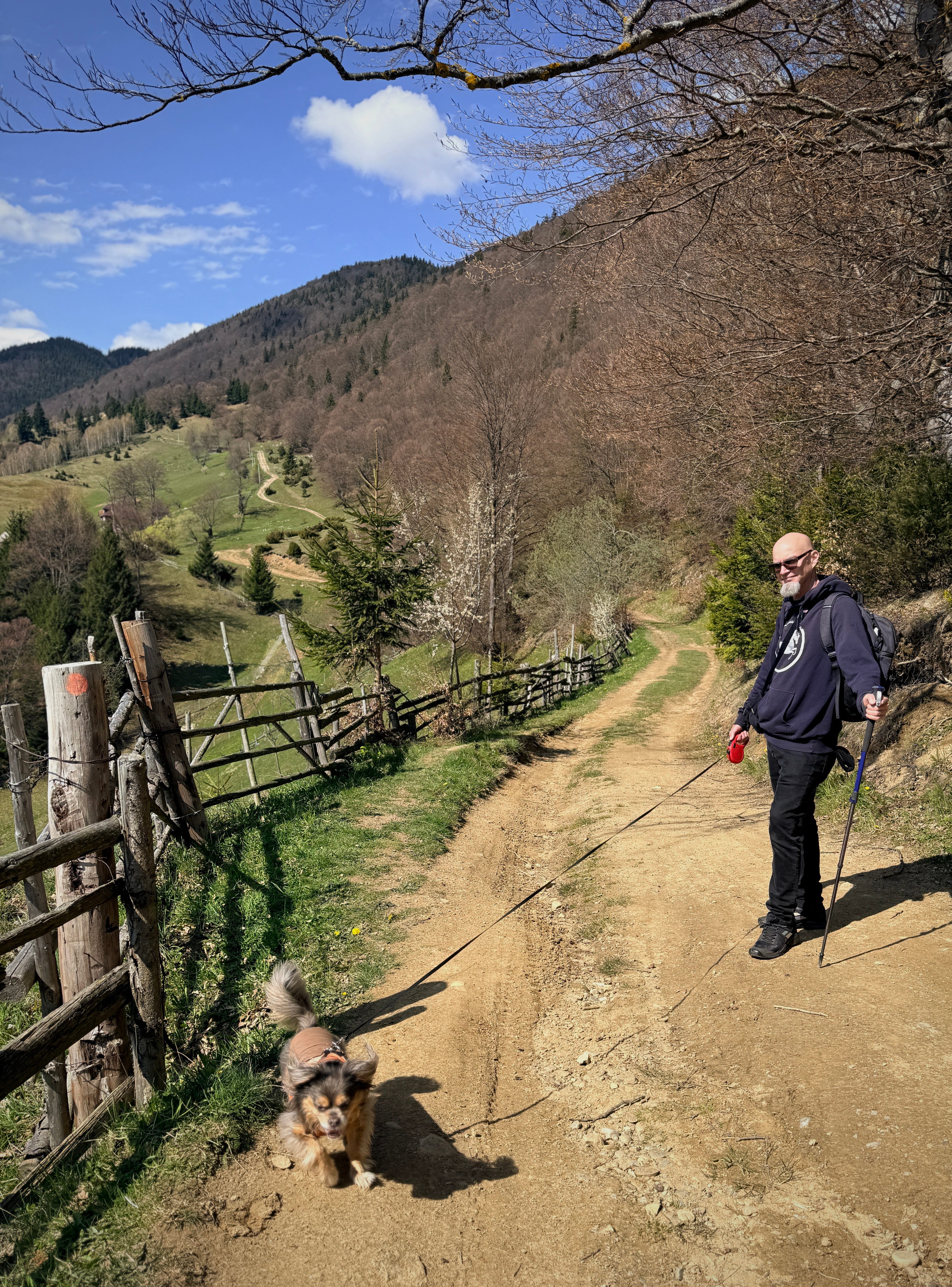
Kirk and I did a fair bit of walking last week. The rural area we were in has fewer than 3,000 people in it, and most of our thinking happened between the trees and the corner where the road bent back toward our guest house.
When you walk the same path every morning, you start to notice the difference between what is permanent and what is temporary.
The trees are the easy part. They’ve been there for decades, doing what trees do, supporting birds and shade and the occasional cat. Solid systems, well-rooted, and completely indifferent to whether you notice them or not. They have a permanence that anchors the landscape.
The scaffolding is different.
There are quite a few of them right now. Houses being built, walls being patched, roofs being half-replaced. And almost every scaffold we passed was wrong in some small or significant way. A plank too short. A diagonal brace missing entirely. One leg sunk into mud while the other rests on a stack of narrow planks, like a Jenga set mid-game.
I kept thinking about who climbs these. The owner who knows exactly which board to skip. The construction worker too used to it to really care. The kid who treats it like a jungle gym when no one’s watching.
Three completely different experiences, and three separate perspectives on safety.
Last week, I wrote about internal communication as the operating system of your school, the channels carrying messages around in patterns most leaders have never actually mapped. This week, I want to look at the scaffolding being built on top of that operating system, very fast, by people moving with confidence.
I want to look at AI.

It’s a Tuesday morning in May. Three people in the same school are starting their day.
The principal opens her laptop and asks her AI assistant to refine the visual layout of next week’s faculty bulletin, then pivots to drafting three versions of the master schedule for next year so she can compare them in tomorrow’s leadership meeting. By 9 a.m., she’s done work that used to take her until Thursday.
The maintenance lead opens the binder where he keeps his inspection logs. Fire drill records, HVAC filter changes, generator tests, the quarterly safety walkthrough notes, the chemical storage register for the pool. Three years of handwritten entries, plus a stack of vendor invoices and warranty certificates in a separate folder. Next month, he has to pull all of it together into the compliance report the business office needs for the board. He’ll spend most of two evenings flipping pages, cross-referencing dates, and rewriting the highlights into a Word document. Nobody has ever told him AI could read his logs, surface the patterns, flag what’s overdue, and draft the report in an afternoon. Nobody has ever asked if he’d want that.
The multilingual family recently arrived opens an email from the athletics lead. It mentions their son by name. It references his basketball achievement from last weekend. It closes with a warm line about how proud the school is of him. They read it twice. Something feels slightly too smooth, the warmth slightly too uniform. They wonder if a human actually wrote it. They wonder if asking would seem ungrateful, or worse, paranoid.
Three people climbing the same scaffold. But who’s safe on it?
AI didn’t wait for your policy.
Here’s something obvious: AI is already touching every corner of your community. Some of those touches are visible and welcome. Some are invisible and welcome. Some are invisible and corrosive.
The problem isn’t that AI is in your school. The problem is the mapping of where it lands, who it serves, and who it leaves behind.
Last week’s piece named internal communication as the operating system of your school. AI is now becoming part of that operating system, whether or not your school has officially decided it is. The principal’s bulletin is being co-written. The maintenance lead’s compliance reports could be drafted from his own logs. The family’s email has likely been drafted by a tool.
None of this shows up on your channel inventory yet, but it’s shaping every channel on it.
This isn’t speculation, and the most useful research isn’t even coming from the education sector. It’s coming from workplace AI research, because what’s happening inside your school is fundamentally a workforce equity issue, not a curriculum one.
The World Economic Forum’s October 2025 report, Beyond the Desk: How AI is Transforming the Frontline Workforce, opens with an observation that may reflect the operational/academic disparity in schools. The global conversation about AI is dominated by knowledge workers who already had decades of digital tools, while roughly 80% of the world’s workforce, the people who don’t sit at a desk, has been largely left out.
You might be thinking, “this isn’t a perfectly suited metric for us in schools,” and you’d be correct, but it still raises significant questions about equity.
Read those numbers and look around your school. The teaching faculty has had over three years of AI conversation, training opportunities, and informal experimentation in the staff room. The operations team, on the other hand, has had very little, if any, of that.
The frameworks exist. The research is published. What’s missing is the translation layer between those frameworks and the Tuesday morning where one person saves four hours, another never gets the invitation, and a third receives a message that erodes their trust by accident.
The equity-first AI framework
To move the needle without judgment, school leaders need a way to look at their “scaffolding” and ask: Who is this for?
So, to accompany the AI Policy that you’ve likely written and implemented by now, I suggest a three-pillar AI Equity Audit.
It’s not a checklist of rules; it’s a way to ensure the trees (your core systems) and the scaffolds (your new AI tools) are actually supporting everyone.
1. Universal efficiency: Is the time-save shared?
If the leadership team is using AI to shave multiple hours off their week, but the maintenance, admissions, and nursing staff are still “flipping pages” in binders, you haven’t improved the school; you’ve just widened the hierarchy.
The Move: Host an “Operational AI” audit. Ask the people who don’t sit at desks: “What is the most tedious data-entry task you do each month?” Then, find the bridge.
2. Cognitive agency: Who owns the prompt?
Equity disappears when AI is something done to people rather than used by people. When the maintenance lead doesn’t know AI can help him, he lacks agency. He is at the mercy of the system.
The Move: Shift from “PD for Teachers” to “Literacy for the Whole Org.” Ensure your operational staff have the same access to sandboxes and training as your AP Physics teacher.
3. Relational integrity: Where is the human “Watermark”?
Our multilingual family felt “the warmth was too uniform.” That is the sound of a scaffold breaking. When we use AI to automate empathy, we risk the very thing schools are built on: trust.
The Move: Create a “Human-in-the-Loop” agreement for community communications. Decide as a team: We use AI to structure information, but we never use it to replace a heartbeat. If a family receives a “warm” email, it needs to be warm because a human felt that warmth.
This week’s move
The scaffold isn’t going away. It’s being built higher every single Tuesday morning.
As a leader, your job isn’t to climb every plank yourself, or to yell at people for building them too fast. Your job is to stand at the base and look at the footings. Is the scaffold resting on the solid ground of your values? Is it wide enough to hold the person with the binder and the family waiting for an email, or is it only built for the person with the laptop?
The trees have been there for decades. They are your mission, your community, your “why.” The scaffolds are how we’re trying to reach the new heights this era demands. Let’s make sure everyone gets to climb.
Systematically yours,

About the Author:
G (short for Gitane) is co-founder and Chief Creative Officer at EKG Collective, helping international schools turn communication complexity into systematic clarity. Learn more at ekgcollective.com.
Really thoughtful piece. The line about “three people climbing the same scaffold” really landed for me. I think schools are having lots of AI conversations, but not always equitable ones. The operational side of schools is so often left out of innovation conversations, even though they carry huge parts of the organisation. Really enjoyed this.