


Where We Are
A potential client emailed me last week. The entire message was three sentences long. The last line was:
“Let’s circle back next month, thanks!”
I read it four times.
Was she actually interested? Was “circle back” the polite-cold phrase that means she’s about to pass on it? Was the exclamation point genuine warmth or performed cheer? Was “next month” a specific timeline, or the kind of “next month” that eventually becomes never?
I lost more time than I’d like to admit to that single closing line.

We Are All Interpreters
I bet you did the exact same thing some time this week.
You read at least one email from a colleague and tried to gauge the temperature. You read a one-line reply from the [insert your supervisory line here] and wondered if the brevity meant calm or annoyance. You opened a parent message and asked yourself, before you even reached the second paragraph, what's really going on here?
You are an interpreter. Every person on your staff is an interpreter. Every parent in your community is an interpreter. The moment a message arrives, the interpretive work begins, and most of it never reaches the sender.
Writing the perfect email and assuming it will be read exactly as you intended is like broadcasting a symphony over a static-filled walkie-talkie. The interference of their day completely alters what they actually hear.
Because even when your community is reading your updates, they are not reading the same thing you wrote.
(If you are still wondering if your staff is even opening your emails to begin with, start with this 6-minute video from Post 02: Why Your Staff Aren’t Reading 👇)
Stuart Hall and the Three Readings
In the 1970s, a cultural theorist named Stuart Hall made an argument that permanently dismantles the illusion of “I hit send, so I communicated.”
Hall said communication doesn’t work the way most institutions assume. You don’t transmit a message directly into the receiver’s brain. You encode a message. The receiver decodes it. Those two acts are completely separate, and the decoding happens through the receiver’s own context, history, exhaustion level, and stance toward you.
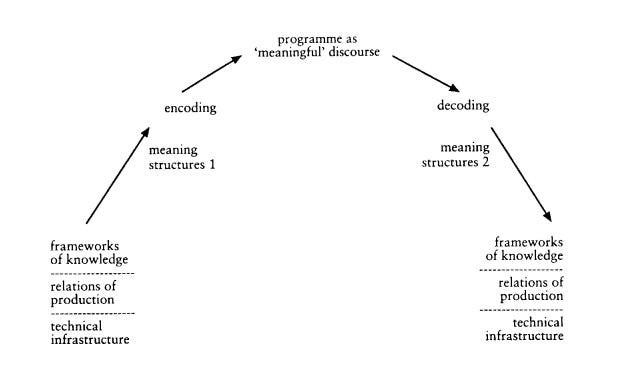
When you hit send, three things can happen:
The Dominant Reading: The receiver decodes the message exactly as you intended. You wrote “We’re moving the staff meeting to Thursday.” They read “We’re moving the staff meeting to Thursday.” Match.
The Negotiated Reading: The receiver accepts the main message but interprets parts of it through their own lens. They understand the Thursday change. But they also notice it lands on the day their team has standing department meetings, and they file away a small piece of resentment for later. The message landed. So did a feeling.
The Oppositional Reading: The receiver understands exactly what you intended—and rejects or reframes it. They read “We’re moving the staff meeting to Thursday” as “Administration scheduled around their own calendar again.” They are not confused. They are not failing to read. They are just reading differently.
The Systemic Shift
If you look at this through the lens of Network Thinking, the takeaway is clear: the nodding you see during a faculty meeting is not evidence of alignment. The polite “Got it” in an email reply is not evidence. Silence is definitely not evidence.
You also cannot write your way out of this. You can write a clearer message and still get all three readings. Yes, Plain Language is a service, but even the clearest sentences are run through the reader’s internal decoder.
This is not a failure of writing. It is a feature of human communication. And once you can see it, you can stop trying to eliminate it and start designing around it.
Stop Asking Dead-End Questions
Checking if a message landed by asking “Did you see my email?”, “Any questions?”, or “Are we aligned?” is a systemic trap. These default prompts force polite, superficial agreement while completely burying real misalignment or confusion.
Questions to Ask Instead:
1. “What did you hear?”
This is the strongest one, and it is deceptively simple. You said something; they heard something. The question acknowledges that those are two separate events. It doesn’t assume a match. You wrote, “We need to tighten our turnaround times.” They might tell you they heard, “You’re frustrated with us.” Both are true. Now you know.
2. “What’s the part that’s sitting with you?”
This is the question for the negotiated reader. The thing that’s “sitting” with someone is exactly what they are going to talk about in the parking lot. Asking about it directly pulls the parking lot conversation into the room. (Notice the phrasing: it’s gentle. It doesn’t ask “What’s wrong with what I said?”)
3. “If you were going to push back on any of this, where would you start?”
This is the move for the oppositional reading. It explicitly grants permission and invites the pushback. Most people will not volunteer dissent unless the cost of doing so is lowered. Even if they say, “Honestly, nothing’s jumping out,” the length of the pause before they say it is data.
A Caveat Worth Naming: These questions are not administrative techniques. They are invitations. If you ask “What did you hear?” and then immediately argue with their response, you have just trained the room never to answer honestly again.
This Week’s Move
I know how heavy the load is right now, so we are keeping this to a 10-minute audit.
Pick one message you sent in the last two weeks that mattered. A policy change, a staffing decision, or a calendar shift.
Identify three different people who received it (e.g., an eager early adopter, someone who tends to be skeptical, and someone you know has been overwhelmed lately).
Ask each of them one of the three questions above. Don’t defend the message. Don’t explain what you meant. Just listen to how they decoded it.
You will hear at least one thing you didn’t expect. That is the point.
Systematically yours,

About the Author:
G (short for Gitane) is co-founder and Chief Creative Officer at EKG Collective, helping international schools turn communication complexity into systematic clarity. Learn more at ekgcollective.com.